Showing posts with label interview. Show all posts

Friday, October 26, 2012

The Color Bulk-Purple: An Interview with Jordan Lawson

Yesterday I reviewed The Amazing Bulk and today I'm publishing two interviews, the first one with director Lewis Schoenbrun and now the Bulk himself, actor and musician Jordan Lawson!


Ninja Dixon: Hi Jordan! Thanks for joing me for this interview! I really enjoyed The Amazing Bulk!

Jordan Lawson: Thanks so much for the interview! I'm glad you enjoyed the film.

ND: As I wrote to Lewis, this is one of the craziest movies I've seen in quite a while. How did you get involved in this project?

JL: I became involved with this film after meeting Lewis in North Hollywood and reading for the role. I knew about some of the people involved from a few friends in the business, so I was prepared for an 'Out There' kind of project.

ND: As an actor, how do you prepare for a very special movie like this? I understand that there was mostly a greenscreen.

JL: I always dig as deep as I can into a character and develop a sense of who they are and what point(s) they are trying to make. I put those points into the performance and pray that others will understand them. Shooting in front of a green-screen is always fun but more of a task when your only tool is your imagination.

ND: Did you have any idea how the finished movie would look? How was your reaction?

JL: I pretty much knew what to expect before I saw the finished film. Everyone on set had the same attitude about what it was, and we all had fun in the process. That is what this film is. Fun! Although I think a good way for a viewer to watch something such as this is to not have any expectations and just sit back and prepare to be laughing your ass off the entire time.

ND: I can see on your IMDB page that you're a veteran among indie-movies but also done some bigger stuff for TV. What's the difference, except the budget?

JL: Yes! Indie films are always great to be a part of and I have a blast every time! I have met so many wonderful, talented people and I am very grateful for that. To answer your question, I think there are many differences when it comes to an indie film and a studio production. Time, or as I like to say 'Breathing Room' is always there when you're on a big budget project, and it gives you an advantage. Indie films, not all but some, have a similar quality when it comes to a shooting schedule and what you have to work with. As an actor, you use what ever time you have and go with it. Use it wisely.


ND: The Amazing Bulk is a small movie with big ideas. It's both a lot of cheese and a lot of passion, which usually goes together. How was it working with Lewis here?

JL: Lewis and I got along from the start. He gave me good ideas and was really on top of it. I was happy about that. If the actor and director can't see eye to eye then there is no film. He knew what he wanted from me, what kind of audience he would attract and how to not get us all killed, which is more than I can say for some, but I think he pulled it off.

ND: What kind of reactions have you gotten so far on The Amazing Bulk? All filmmakers get bad reviews sometimes - including me - and sometimes the easiest way for a reviewer is to take a shot at the actors because they're the face of the movie. What's your opinion about this? If you've gotten any bad reviews, how do you deal with them? And how do you deal with good reviews?

JL: There are always good reviews and bad reviews for everything. I believe everyone has their fair share of both. I am always glad to hear when people like the films I appear in and that is one of many things that keep me going. I have noticed that with any project, when there is a bad review, it always seems to be much longer than a good one. They seem to have more time on their hands than the ones writing good reviews. I have seen video reviews, good and bad, that are longer than the actual film. Everyone has an opinion and everyone has different likes and dislikes. You can't please everyone. So pick your poison, sit back, relax and enjoy yourself!

ND: What's next in line for you now? Can you tell us about some upcoming projects?

JL: I have just finished 2 feature films that are due by the end of this year. 'Shoot the Saxophone Player', a 1920's mafia film and 'Just a Simple Love Story', a romantic comedy. I have another film in the works that will be starting up by November this year as well. Keep an eye out for what's next! This should be good!

ND: Thank you Jordan, I'm happy you got the time to answer these questions and good luck in future adventures!

JL: Thank you to all those who take the time to check out this site, and thanks so much Fred! Keep doing your thing and I'll see you soon I'm sure.

Make sure to visit Jordan's official IMDB page and keep yourself updated!

How To Bulk Up Without a Budget: An Interview with Lewis Schoenbrun

Yesterday I review the crazy, colorful The Amazing Bulk, and today we're gonna dive into this production a bit deeper by interview the director himself, Lewis Schoenbrun! Enjoy!


Ninja Dixon: So, this is one of the craziest movies I've seen in a while. How did you come up with the idea, the story, to do this film?

Lewis: Schoenbrun: My producer Dave Sterling had asked me come aboard a film he was involved with called X-Spider.  It was supposed to be a micro-budget comic book movie, a female version of Spiderman.  I was excited about doing something besides a horror film, but was also concerned about the production values.  You can easily get away with making a horror film on a shoestring budget, all you need are some attractive looking actors; a few easy locations like a house, a school, a forest; some simple props like guns, knives, body parts;  and an effects guy to do the makeup for the monster and some blood effects. Now to try to make a comic book movie for no money which would require exotic locations and special effects I thought was a tremendous challenge.  While working on X-Spider I began to research stock CGI shots which I could incorporate into the movie which would hopefully up the production value for not a lot of money.  I was hoping to shoot some of the locations using green screen techniques, unfortunately or fortunately depending on how you look at it, the executive producer of X-Spider wasn't particularly keen on the idea. That project never got going and afterwards Dave approached me with how much he really liked the idea of using green screen to make a comic movie.  So we came up with the idea of a parody of the Incredible Hulk.  Dave hooked me up with a couple of writers and we tailored the script around virtual sets that I was able to purchase online. We took a step backwards and used the plot of Dr. Jeckyl and Mr. Hyde which seems like a pretty obvious influence for the Hulk, this kept the story line of the scientist, his fiancee and her father the general.  We also retained the idea of the mixing of potions to create the serum but added the evil Dr. Kantlove character. Originally we were going to do it like the Hulk TV series from the 70's with a guy dressed up, but as the project evolved I found the Bulk animation character and thought that this would be so much better.  Even the rats in the laboratory were supposed to be real until I found a CGI rat that I was able to insert into the various scenes.

ND: I'm not gonna ask about budget, because like with your last movie Aliens vs Avatars I guess it was pretty low. Can you tell us a little about working with a small budget vs big ideas?

LS: No, it's okay I am more than happy to discuss the budget, I spent $14,000 for the entire production. That's about $6,000 for the actual shoot which was five days, $3,000 for the sound mix, $1,000 for the online and color correction, $2,000 for all the CGI and another $2,000 for the rest (i.e. composer, my co-editor, hard drives, props, software, etc.)  I really like working on these micro budget productions primarily to retain total creative control.  Now The Amazing Bulk I financed completely by myself, the other features were all financed by either the producer or the distributor and were in the $100,000 to $10,000 range. On none of these films have I ever felt that anyone came and told me what I could or could not do with the movie.  Once you get into larger budgets then you have to answer to other people, particularly those who are putting up the money or are responsible for the money.  There are only a handful of top directors who have complete creative freedom, so I prefer to work on smaller budgets where I still retain that level of control.

ND: It's not only the visual style of the movie that feels very much like a cartoon, even the actors work their way through the material with big words and big acting. Can you tell me about how you worked with the actors, both on a technical level and how you got what you wanted from them acting-wise?

LS: Well I consider myself to be a quiet director, I generally know what I want when I show up on set and am not a screamer.  To me casting is the most important part of the directing process, if I haven't cast the film properly then I have failed the movie, not the performer. Keep in mind that this is a spoof of comic book movies which are shall I say, comic bookish.  I wanted all of the acting to be broad (some people call it hammy or bad acting) but this is what the story called for.  I've directed dramatic films where the acting style needs to be subtle and nuanced.  But this isn't a film about deep emotions, it's about a guy who is willing to do whatever it takes to win the girl of his dreams and who is surrounded by stock villains. I think that both Jordan Lawson and Shevaun Kastl did wonderful work to ground the film, but everyone else is a caricature and needed to be bigger than life.

ND: Regarding the backgrounds and animations, are all these made for this movie or is there some stock animations you used?

LS: With the exception of a few shots (i.e. the helicopter interiors, the chemical processes through the microscope and one of the walls in Hannah's bedroom) everything else was off the shelf. I either purchased these backgrounds from eBay, Digital Juice, Animation Factory, Tubro Squid, etc.  As I mentioned earlier the Bulk & rats were also purchased.  That's why the film has this crazy quilt kind of a feel, I wasn't too concerned though about the overall look.  Years ago I assisted on a feature animated film called, The Thief and the Cobbler, directed by Richard Williams who did the animation for Who Framed Roger Rabbit.  Thief was made over a 30 year period of time and the style changed drastically throughout the production so I was confident that this wouldn't spoil the overall feel of the movie.

ND: My favourite sequence is when the Bulk escapes at the end and runs (or I would say jogging) through a huge landscape, meeting a lot of odd characters - from the flying dog, the gecko lizard, Hercules and so on. It feels like an old Looney Tunes! Am I right? :) 

LS: Yes, I was just going for a total wacky feel, some people have criticized the film for going from comic book to cartoon, but to me those lines become blurred once you enter realm of a movie.

ND: For me filmmaking is more about passion (and talent) than having a lot of money doing a movie. Some filmmakers spend an entire lifetime NOT making movies because they're waiting for the big break. You haven't done that! What's your driving force?

LS: Plenty of people talk about making a movie but never actually do it.  Now years ago when I first got into the industry it was terribly difficult because of the enormous costs involved. Now with digital filmmaking almost anyone can make a film, the trick though is to make a movie that you can get sold and marketed.  So now people who only talked about making a movie can actually do it, whether it is good or not will be determined by if it can secure distribution and find an audience.  What is it that keeps me passionate about movies and movie making? That's very simple, it is the one thing that I have loved my entire life.  I really enjoyed going to the movies as a child, the wonder and magic that would unfold before my eyes was something that I loved.  To me going to see a movie in the theater was like a religion.  I would sit in a darkened theater for several hours and just enjoy the experience of being transported to another place or time and the ones I enjoyed the most where the ones which took me some place that I'd never seen before.  That was a bit of what I was trying to accomplish in the Bulk, to show a world like no other in the context of a comic book character.

ND: How has the movie been received so far? How's your reaction both to good and bad reviews?

Well honestly I would have to say the film has been receiving mixed reviews.  I would say mostly negative, but I think maybe some people don't quite get the movie and are taking it way to seriously.  Honestly one of my biggest influences in making this film was the animated sequence in Mary Poppins, Who Framed Roger Rabbit and Speed Racer the movie.  I find some people cannot accept the idea of live action characters in an animated world.  It is like someone who goes to see a sci-fi movie who doesn't like the genre. Well of course I relish in the positive reviews, but to be honest I also appreciate the negative ones also.  If someone sees fit to write that my movie is the worst piece of garbage then I know that in some way I have gotten under their skin. My film isn't controversial so for someone to have such an extreme reaction I believe speaks to their own jealousy and frustration at not being a filmmaker.

ND: What I understand you're not in the US right and, can you tell us about what you're doing now and if you have any upcoming movie projects?

LS: I have spent the past four years teaching at an international film school in the Philippines.  The industry really dried up with the global recession and it became too hard for me to support myself as director or editor of independent features. I came out here to edit a feature and to also teach.  I've really fallen in love with the teaching and am happy to give students the support they need to become filmmakers on their own.  I do have a couple of projects that I am currently working on, one is a low budget horror film involving dinosaurs and the other is an adaptation of a novella by a famous sci-fi writer.

ND: Thank your for taking your time answering these question! It was a pleasure, Lewis!

LS: Thank you Ninja!

Also read the interview with actor - The Amazing Bulk himself - Jordan Lawson!

Friday, September 16, 2011

Christoph Klüppel - Back From the Jungle! part 5

Continuation from part 4.

Ninja Dixon: ....and I have to ask you: You, if someone, has experience of running around in the jungle with bare chest and arms - how do you cope with the mosquitos? :) I've been in Thailand, and I plan to visit it again, but for me its hell out in the countryside hiking, with the heat and the insects trying to feed on my blood!

Christoph Klüppel: Of course, we had some insect repellent to put on our arms and other exposed bodyparts for protection. But mosquitoes and insects were not as much of a nuisance as one might expect. First of all, most of Chalong’s movies of the ”Gold” series were usually shot during Thailand’s sunny, dry ”cool” season, between November to January, when the mosquito plague is not so severe, and bad weather is not an obstacle to continued shooting. In the rainy season, things can look quite different. Also, many “jungle” areas used in the movies look more like ”jungle” than they actually are. Although there are trees, undergrowth and truly “jungle-looking” locations seen in Phillip Chalong’s various action movies, those scenic locations were hardly ever deep in the jungle, but often merely a few hundred meters off a farm lane or even a main road. After all, the set had to be accessible not only by the actors and camera team, but also by lighting trucks, crews, and trucks bringing lots of various equipment , and the “jungle areas“ chosen for the shooting were generally selected so that they could accommodate all that.

ND: I need to ask about Devil’s War (1993), the only time I’ve heard or read about this movie is on your homepage. So can you please tell us about it? Is it possible to find on VCD or DVD?

CK: “Devil’s War” is the very first, if not the only movie of Kitti Dasakorn, who also plays a part in this movie, next to his older brother Darm Dasakorn, who had been quite famous as an actor in the local movie scene, before he actually shot someone in real life and had to spend a few years in jail. The movie “Devil’s War” was low budget and lives of the good storyline and the great commitment of all the actors. I am playing the part of a Vietnam war veteran, whose plane gets shot down over a dense jungle area, survives badly hurt and is eventually found and nursed back to health by a local woman, who becomes his wife. Living in the jungle, hunting for food with arrow and bow, I one day get back home from a hunting trip and find my wife and daughter murdered. Following the foot traces of the small group of murderers through the dense jungle, I realize that this small group eventually joins a larger group of travellers and that the two groups continue their journey together. Falsely assuming that the larger group is complicit in the actions of the murders, I decide to kill all of them. However, as the number and weapons of this group are far superior to my own knife and bow, I start killing them one by one from ambush and with “jungle-techniques” such as traps, sharpened sticks etc. However, there is eventually even kind of a happy end. But I don’t tell you about it now; wait until you see the movie. I don’t think that it ever came out on VCD or DVD.


ND: Mission Hunter 2 came some years after, in 1995. Is this a direct sequel to the movie, or is it just in the title? The story and cast is similar.

CK: “Mission Hunter II” is not a direct sequel to “Mission Hunter I”. It is an entire different independent story, even though the cast is similar.

ND: You’re back, Rittikrai is back – but the movie is most famous for Tony Jaa’s small part. The US DVD markets it as a Jaa-movie for example! Do you have any memories of Jaa during this time? He must have been very young?

CK: To say the truth, I don’t remember Tony Jaa and his little part at all. There were a number of other stunt-men in Panna Rittikrai’s stuntman-crew, who in my opinion performed quite as difficult and impressive stunts, as Tony Jaa did. So at that time, at least in my personal view, Tony Jaa didn’t stand out in any special way. And, by the way, not only Tony Jaa, but we all were yet pretty young back then!

ND: The showdown in this movie is fantastic, one of my all-time favourite action-sequences. It seems quite complicated with a lot of explosions and stunts everywhere. How long did it take to shoot that ending?

CK: I can’t remember any more, how long it took exactly to shoot this action-packed finale, but it definitely didn’t take more than a few days. Everybody worked hard with dedication and did the best they could with whatever little was available, as the budget of the movie was quite limited. But the result was definitely impressive.


ND: And by the way, before I forget, how long was the shooting schedule of these movies?

CK: As far as I recall, the shooting schedule of these movies never much longer than some 4 weeks. It may be that some scenes may already have been shot before my involvement or afterwards, but I don’t think that the total shooting took much longer than those few weeks.

ND: “Mission Hunter II” became, what I know, your last movie – at least in a major part. Why is that? Did you feel yourself that you wanted to focus on other things? Please tell us about your career now and future.

CK: In fact, I actually did some further acting work after the completion of Mission Hunter II; for example, I played a short part in yet another movie produced by Khun Chokechai, called “Sing Siam” which is concerned with Thai boxing. Later on, I also played a part in a 15 sequence-TV action series, called “Dangerous Duo” (“Ku Anatarai” ) with Pete Thongjuer and Amphon Lampoon in the lead.

However, there are mainly two reasons for my eventual “withdrawal” from acting. First and foremost, with the shift of technology from shooting movies on film to the arrival of modern “video”-type shooting technology in the late nineties, things became more difficult, especially for me as a non-Thai. The arrival of “video”-type movie-shooting technology enabled , for example, the shooting of extended conversations without any cuts, making memorizing longer parts of script ( in Thai) necessary, which would have been a bit difficult for me to do without being able to read Thai. At the same time, remuneration became rather less than in earlier days, so that it wasn’t really worth my while to try and make the effort to continue working in the movie industry, which I actually never felt to be my real calling.

Another reason was that my career in the local fitness industry had meanwhile started to materialize and consolidate; throughout the years, I held several fitness management positions in various renowned local fitness clubs, next to running an own gym-equipment manufacturing business. And, as a foreigner living in Thailand with the intention to reside here for good, my continuous stay and long-term visa was dependant on the possession of a work-permit. A very important document over here, required even for things as simple as opening a bank-account etc. For all these reasons, I valued continuous job security with its privileges such as work permit, proper long-term visa and a regular income etc. as more desirable than the occasional work as an actor with all the inherent risks for my long term plan to live, work and reside here for good. To successfully keep up a management employment and also to pursue acting work with its irregular schedules, often requiring up-country stays of days or even weeks at a time was simply something hard to combine with each other.

Sometimes one simply must decide what’s most important in one’s life, and in mine, this was definitely not acting.

That was Mr Christoph Klüppel, ladies and gentlemen! Me, Ninja Dixon, is very grateful for this opportunity to interview Mr Klüppel about his movie career in Thailand, his past and what’s happening right now. I put together what I believe is his complete filmography (not counting TV and advertising), and feel free to use this and the interview as a resource and reference in the world of Thai action cinema, with a note were you took quotes and information.

The Lost Idol (1988)
Mission Hunter (1989)
In Gold We Trust (1990)
Satanic Crystals (1992)
Devil's War (1993)
Mission Hunter 2 (1995)
Sing Siam (1996)


You can find his official page here, were he also has a lot of cool photos from his fine career. And yes, what about Satanic Crystals? Even after watching the movie (for the first time) Mr Klüppel had no specific memories from the shooting... so just watch it yourself instead and love it!

Thanks and I hope you all enjoyed this!

Ninja Dixon

Thursday, September 15, 2011

Christoph Klüppel - Back From the Jungle! part 4


Continuation from part 3.

Ninja Dixon: In Gold We Trust (1991) looks big and seem to have some money behind. Philip Chalong is doing the directing again, but there is a lot of non-Thai people involved. I heard this was a co-production between US and Thailand, with American money bringing stars like Jan-Michael Vincent and Sam Jones into the movie. Can you tell us a bit about what you know about the history of this movie?

Christoph Klüppel: Unfortunately, about the history of this movie I don’t know much at all, as I was hired as an actor and only came” into play” once the shooting started. So I was not involved in the preparation work leading up to the actual shooting of the movie. What I can remember regarding the shooting is that working on this movie was , probably partly due to the US financing, far less stressful and less exhausting than working on ”The Lost Idol”. When shooting ”IN GOLD WE TRUST” ,there hardly was any need to get up as early as 3.30 a.m. to be driven out to the set somewhere in the middle of nowhere or into the jungle, which was quite common when shooting ”THE LOST IDOL”; and , when shooting ”In Gold We Trust” it was also not as often necessary to work until late at night. As far as I recall, the shooting , at least as far as my part was concerned, was also completed in far less time than ”The Lost Idol”. So all in all, shooting ”In Gold We Trust” was – at least for me - a ”walk in the park” compared to the far tougher circumstances and work conditions I had to put up with when shooting ” The Lost Idol”.

ND: One of many reasons I love Thailand, and also watch a lot of Thai movies, is the fantastic locations. This movie has a lot of very exotic and beautiful places. Where was it shot? The cave for example, is it the same that was used in The Lost Idol?

CK: ”In Gold We Trust” was, at least for a major part, shot in areas around Saraburi and in the forested hills leading up to ”Muak Lek”, 130 km North-East from Bangkok, where also the cave was located. It was not the same cave as the one that was used in ”The Lost Idol”, though . Some further scenes ( f. ex. the scene where the safe was hidden in the cave under water) was shot in Petcharat Camp, also located in Saraburi region, just a bit off the major highway. The Saraburi area always used to be one of the most preferred shooting areas of director Khun Chalong, as it offers beautiful natural scenerie, waterfalls, forested jungle-like areas, etc. and is yet just some hundred kilometer from Bangkok. In those times film needed to be developed in the lab in Bangkok to check whether the various takes had turned out all right, and due to the proximity between the set and the capital Bangkok, it was easy to take any completed film rolls back to the lab in the city, get them developed promptly, and – in the event that any scenes shouldn’t have turned out all right - the respective scenes could easily be shot again, while we were still working in the same area. But usually this wasn’t necessary, as the camera team was quite experienced and most professional.


ND: Jan-Michael Vincent did a lot of movies around this period, and then slowed down to finally retire totally some years ago. You have some scenes with him, mostly action, but how was he to work with and did you hang out with him between takes too?

CK: Jan-Michael Vincent was quite all right to work with, but I personally don’t remember him as very sociable in his free time. I recall that he appeared to be a bit “under the influence” of some alcoholic beverages often, or even most of the time, although this did not affect his acting ability to a major extent. I guess it may have been one reason why he mostly preferred to rest in the times between his takes . That’s probably one of the reasons why I didn’t get much of a chance to hang out with him. Also, as we were working on different teams, we actually didn’t have all that many shooting days in common. While Jan-Michael was with the “good” guys, I was with the “bad” guys, led by Sam Jones ; therefore, many times Jan Michael didn’t need to be on the set during scenes I was playing with Sam Jones and the other ”bad” guys, whereas I was not always needed on the set when Jan-Michael and the “good” guys were filmed.


ND: One scene I watched over and over and over again is when you lift Vincent up, just holding his head. How did you do that scene? I tried to spot wires, but didn't seen any stuff like that. Another illusion is when you get killed by the sword at the end, a very nice effect. But how did they do it?

CK: As of the mentioned scene, lifting Jan-Michel Vincent up just holding his head, there were definitely no wires used; what you see is what actually happened: the director instructed me to grasp Jan-Michael by his neck and pull him out of that earth-hole, and that’s what I did. And I didn’t have to do it just only once; to poor Jan-Michael’s misfortune, we had to repeat that scene at least three times until the shot was finally approved by the director. As I recall, Jan-Michael tried to help to make the scene look more realistic by jumping off the ground at the moment of my lifting him up, but in the excitement performing this particular scene several times in a row, I probably clutched his throat a bit hard at one or the other time. Jan Michel never made a fuss about it, but his then wife later scolded me for this at a party organized at the director’s house to celebrate the completion of the shooting, rebuking me that Jan Michel’s throat had been aching for days after this particular shot. – As of the scene when I get killed by the sword, the pointed end of a custom-made wooden blade wrapped in silver foil was attached to my back under my shirt before the shot was taken, making it appear, as if the blade had pierced me from the front and was now sticking out behind. When the scene begins, I am first seen from the front, so that the previously attached blade end is not yet visible at this moment. When the Japanese soldier then “pierces” me with his sword, the sword blade telescopes, shortening to less then half of its original length with the impact on my body . “Injured to death”, and grasping the sword, thereby holding it in place, I slowly fall down, turning slightly in the process, so that the blade’s pointed end, previously attached to my back now becomes visible, creating the impression that the Japanese soldier’s blade had pierced my body from the front. In fact, everything quite simply done, but obviously realistic.

Attention: Mr Klüppel shared with me a whole bunch of excellent and very rare behind-the-scenes photos from the scene described above, and I've attached them in a separate album for you all to see. Password is "attackafant". All of them are copyrighted to Christoph Klüppel and you need his permission to use them. Respect this.

ND: You have most scenes with Sam Jones, and I have to admit I always liked that guy. Here's he's really over-the-top, giving us a larger than life-character. Can you tell me about working with him?

CK: I was definitely impressed with Sam Jones’s acting style, which, in my opinion, truly brought to life the vile “bad guy character” which he portrayed. Sam Jones was easy to work with, and, due to our common interest in weight training and fitness, we had quite a few conversations. Sam Jones had even bought some department store weight-training equipment and brought it along to the set where he tried to work-out a bit between scenes whenever there was a chance; as of myself, I preferred to work-out at the hotel where I lodged and where I had arranged for my own gym set-up in one of the hotel rooms from which bed and furniture had been removed. However, during all the period of the shooting, there was hardly much time or spare energy left to work out much.

ND: It must be hard to find a stunt-double for you, so I guess you - like in The Lost Idol - do a lot of your stunt work yourself. How did you prepare for the stunts, training, stunt co-ordinator and so on?

CK: You are right, all the stunt work, which I had to perform, I had to do by myself, same as most of the other actors, with exception of the lead actors from the US of course. There were stunt-people to take over for them whenever there was a scene with any potential danger.
As of the stunts we other actors had to perform by ourselves, there usually was no special preparation or training provided for those; however, due to the regular intense weight training regimen which I used to adhere in those times, I fortunately was in a good physical shape and quite fit, which certainly helped. As of the stunts, the director and his assistant directors simply explained what to do and how to do it, and then we just tried to perform as best as possible following their instructions. Usually this worked just fine.

ND: I noticed that also in this movie your characters name is Christoph, like in The Lost Idol. Did they found your real name perfect for the parts, or was it just something that came naturally in the dialogue during the shooting?

CK: Obviously, the director Phillip Chalong must have found my real name perfect for my parts in both movies ”The Lost Idol”and ”In Gold we Trust” , although in the movie ”In Gold WE TRUST” it is spelled ”Russian style” as ”Kristoff” , whereas my real name is spelled ”Christoph”. As I am enacting the part of a Russian mercenary, in the English version of the movie released in the US, my own voice was dubbed by someone speaking English with a Russian accent; my own strong German accent obviously didn’t fit the part.

Wednesday, September 14, 2011

Christoph Klüppel - Back From the Jungle! part 3

Continuation from part 2.

Ninja Dixon: When I first visited Thailand, one of the VCD’s I bought was Mission Hunter. I had no idea what it was, except you’re in front with a huge gun! Produced by Pechpanna Productions and famous producer Chokchai Pechpanna. Can you tell us how you got this part?

Christop Klüppel: First of all, the famous producer’s name is Chokchai Maliwan. Petchpanna was the name given to his production company to give recognition to Panna Rittikrai, who was Khun Chokechai’s business partner back then; his stuntman-crew’s exciting stunts and his initiatives actually made those two Mission Hunter Movies what they became popular for. Khun Chokechai was mainly responsible for the business part, i.e. he raised the necessary money, financed the movie and was responsible for the marketing.

As of myself, I got my part in “Mission Hunter 1” as a direct consequence of my performance in the movie “The Lost Idol” directed by P. Chalong. Once “The Lost Idol” had been shown in the cinemas, my then well-developed bodybuilder’s physique had generated quite some interest among the local public; as someone, who had been hired as an actor by Chalong - back then one of the most accomplished action movie producers in Thailand -, I was simply viewed as someone who could possibly draw attention to the much smaller budget production of “Mission Hunter I”. So I was approached by Chokechai Maliwan and his team who told me about their plan to shoot Mission Hunter and hire me to play a part in it, an offer which I accepted without much consideration. And I never had to regret it, as I was very well attended to throughout the shooting up country in Khon Khaen area, Panna’s home region; I received VIP treatment. The actual shooting was also much less stressful than during “The Lost Idol” and - last, but not least- a casual friendship developed between Chokechai Maliwan and myself which has lasted up to today. We are still in loose contact, more than 20 years after shooting these movies, and we still meet for lunch now and then.


ND: Your co-star in Mission Hunter was Panna Rittikrai, famous for being the mentor of future-star Tony Jaa and himself an action-star for many years. He’s famous for creating a lot of memorable stunts and action. How was he to work with? Did he choreographed your stuntwork too, or was he just an actor?

CK: “Co-star” is a big word, as it makes me a “star”, too. To say the truth, I never actually considered myself as a “movie star” just for having had the opportunity to play parts in some of these movies back then. As of Khun Panna, he was always friendly, easygoing and easy to work with. We always got along well. He impressed me with his modesty, professionalism and down to earth character, despite all his accomplishments. I have never had any negative experience with him whatsoever. Panna did not only act, but, as far as I recall, he was also actively involved in directing/choreographing many of those action shots; after all, stunts and action has always been his major expertise.

ND: Like almost all countries of in Asia, from Hong Kong to Japan, the comedy is an acquired taste. And here we have Mission Hunter, which has some scenes of very broad comedy. If I remember it correctly, one of the jokes is your character showing his “private member” to the others, to impress! I don’t know what I want to get with this question, but what’s your opinion about the comedy in Mission Hunter? :)

CK: As the “private-part”-comparison in the mentioned scene obviously went in my favor, I naturally didn’t mind it so much. However, I personally certainly have a quite different kind of humour, and I have never considered this particular scene all that funny. But the point here was to entertain/amuse the mainly up-country Thai audience which the movie was intended to please, and it certainly did the job. Thais generally often find things funny, which a Westerner would not perceive as funny at all, whereas a Thai may be offended by something, a Westerner may consider a harmless joke. There exist cultural differences, and those even extend to what is perceived as funny and what is not.


(all photos from the movies belongs to Dr Christoph Klüppel)

Tuesday, September 13, 2011

Christoph Klüppel - Back From the Jungle! part 2


continuation from yesterday...

Ninja Dixon: Your first movie was The Lost Idol, was it made in 1988 or 1990? I heard different years.

Christoph Klüppel: The shooting of The Lost Idol – in Thailand it is called “Gold III” - began in the end of 1987, and the last scenes were shot in early 1988.

ND: It has the feeling of a movie with a slightly bigger budget than usual. The cast is big, the explosions are even bigger and it has a name cast. How did you get involved in this movie?

CK: My involvement with this movie was incidental. Having moved from Austria to Bangkok (in April 1987) , just only a few months before The Lost Idol was produced, I got into a taxi one day, driven by a driver who spoke fairly good English. He expressed awe about my well-trained bodybuilder’s physique of those days and said that I should be in the movies. During our subsequent conversation he then explained that he used to live near the home of Thailand’s most famous action-movie producer Chalong Pakdivijit ( “Philip Chalong”) and that he could take me there. So I simply had him drive me to the producer’s villa, rang the door bell and said hello. Khun Chalong was home, and I was welcomed in and received in a friendly manner. At that time, Mr. Chalong was working to get ready to produce The Lost Idol; he was likewise so impressed with my physique (in those days, well-trained bodybuilder types of my height of almost 2 m height were rare over here!) that he promised to give me a part in his new movie right away at this, our very first encounter. As I had just moved to Thailand and at that time didn’t have any other employment opportunities in sight, yet, I was most grateful for the opportunity and accepted the offer.

ND: Even if Erik Estrada is top-billed, it feels almost like an ensemble cast – everyone is important, even the bad guys. I read somewhere that Estrada was forced to take this job in Thailand because of money trouble in the US and that he had to take a job outside the actors union. How was it working with him?

CK: As far as I am concerned, working with Erik Estrada was quite easy and pleasant; I always got along with him quite well. I remember Eric Estrada as being of an easygoing personality, and I never observed any unpleasant issues, such as an exaggerated star-demeanor, with him. In fact, I recall that I was quite impressed with his professionalism. However, I didn’t have very much personal contact with him, as he had been provided with a driver, and, together with the other US actors, had been accommodated at a more luxurious hotel than the rest of the cast. So after his work was done, he was usually promptly driven back to his hotel to rest. On off days, he was taken on excursions, and so we didn’t have much opportunity to get better acquainted.


ND: Two of Thailand biggest movie stars are in it to, Sorapong Chatree and Krung Srivilai. When you did this movie, where you familiar with their stardom?

CK: Back then, I was already somewhat familiar with the stardom of Sorapong Chatree, who until now remains one of the most popular actors in Thailand and is meanwhile also producing movies on his own. And, I personally also believe that he is good and down-to earth person, despite his well-deserved stardom. In all his movies Sorapong plays a hero and a person of high moral integrity, and that has endeared him to the Thai public. And to me, he appears to be that type of person in real life as well; during my 25 years in Thailand , I have never heard of him being involved in any scandals, and there never were any rumours about even the very least misconduct on his part, even though public figures of his standing are generally subject to increased public scrutiny and media attention. As far as I know, Sorapong Chatree lives an exemplary life-style and until now contributes a lot to society.

As of Krung Srivilai, I can’t not say all that much; as far as I know, he generally plays bad guys in the majority of his movies, and at the time of getting to know him during the shooting of “The Lost Idol” I didn’t perceive him to be a particularly popular movie star.

ND: It seems just the actors were westerners, but it has a Thai crew. How was the communication with the other cast and the crew? Did you speak and understand Thai at this point?

CK: The Lost Idol has both a Thai cast (in order to be able to successfully market the movie in Thailand, where names like Erik Estrada, James Phillips or Myra Jason wouldn’t ring a bell) , and a Western cast with some well-known Western actors ( to be able to successfully market the movie in the US (where nobody would know the likes of Sorapong Chatree or Krung Srivilai). At the time of shooting “The Lost Idol” I had been in Thailand for about eight months and already understood a bit Thai, basically just enough to have an idea what was being talked about and to manage to make myself understood. This facilitated my communication with the Thai crew, but, as of Khun Chalong and his assistants, they spoke good English anyway, which was essential for them to communicate with the US actors. For me personally, there were no major issues regarding communication, neither with the Thai crew nor any of the Western or Thai cast.

ND: You are obviously a very physical guy, so I guess the action wasn’t any problem for you here, but that helicopter scene look quite dangerous. Was it you, or did they actually find a stuntman that had your physique?


CK: That helicopter stunt was performed by me in person. There certainly wasn’t any stuntman that had my physique and, even though the scene looked dangerous, I was yet confident in my capability to successfully manage to perform it. For safety, I was hooked up to the ski of an old army-helicopter with a hidden steel cable, and when the helicopter took off, I had to cling on to one its skis during take-off, clutching a straw-dummy in a Vietnamese uniform with my legs to make it appear, as if an enemy “soldier” was clinging on to my legs to pull me off the helicopter. I had been instructed to kick that dummy off, when the helicopter was flying over a certain tree, which I did; however, my kick caused the dummy’s head to fly off in one direction and the rest of the dummy’s body in another; when you carefully watch the scene in slow motion, you can still notice both parts falling separately to the ground. However, as this event was recorded in a very long shot, the scene fortunately didn’t have to be retaken, although back then I even volunteered to do it again. After I had kicked off the dummy, the helicopter flew a wide round to prepare again for landing, and during this time, my arm- muscles got so exhausted that it became quite hard for me to keep hanging on. So I also brought my legs up and wrapped them around the helicopter’s ski during its flight in order to take strain off my tiring arms and to enable me to hang on for a bit longer; after all I didn’t have much confidence that the attached safety cable would actually hold my weight of 120 kg, if I would indeed let go. But in the end, everything went well, and the helicopter brought me safely back to the ground before I ran out of strength and couldn’t cling on any longer. Such events were typical when shooting movies in those days; technique wasn’t very advanced yet and very little of the “dangerous” action was performed by stuntmen, but the movies lived from the initiative, courage and dedication of the actors who had to perform most, if not all their action stunts by themselves without much technical assistance.

ND: With Erik Estrada and James Phillips in the cast, plus you, The Lost Idol was probably aimed at an international audience. How did this affect you? Did you get a chance to travel around doing press for the movie?

CK: The Lost Idol was intended both for the Thai audience and an international audience, mainly in the US. However, I fortunately didn’t have to travel to abroad to help promoting the movie. And I was quite glad about that, as I certainly wouldn’t have been eager to travel anywhere; I was, and I still am happy for each and every day that I have the privilege to be here in Thailand, and even nowadays, I hardly ever leave the country, unless it is unavoidable.

However, as of promoting “The Lost Idol” locally, I remember that shortly before The Lost Idol had its premiere in the cinemas, I myself and some of the Thai actors were asked to attend a televised Thai boxing competition in one of Bangkok’s boxing stadiums; each of the actors had been given a golden necklace by the producer to donate it to the winner of each of the various boxing matches which is customary habit over here, and in this case it was aimed at promoting “The Lost Idol”, which is called “GOLD III” here in Thailand.

Read part 3 tomorrow...

Part 3, published tomorrow Wednesday, will deal with his role in Mission Hunter together with martial arts legend Panna Rittikrai!

(all photos from the movies belongs to Dr Christoph Klüppel)

Monday, September 12, 2011

Christoph Klüppel - Back From the Jungle! part 1


It wasn’t until 2006 I became aware of the mighty presence of Christoph Klüppel. I’ve probably seen him before, on VHS home in Sweden when I was younger and had no idea that it was possible to watch movies outside the United States. Well, maybe just Hong Kong and Jackie Chan. But you can imagine how my fascination started when the first I saw of him was this:


At this time I knew this was a Thai movie, because I bought it at Uncle Chai’s shop at the Pakkret intersection, in Bangkok. A small store, like many others, but this one’s filled with vintage Thai movies – mostly flicks with Mitr Chaibancha, Sombat Metanee and Sorapong Chatree – the holy trio of Thai male movie stars. At this time I was mostly looking for productions starring Panna Rittikrai, because I saw his directional debut Born to fight earlier that week, plus the in-name-only remake, and I wanted to see more!

Fast forward to 2011 and I actually managed to find every known movie starring Mr Klüppel, including the fantastic, cheap and entertaining Hong Kong movie Satanic Crystals where Mr Klüppel has a smaller part – but still manages to kill a lot of people and flex his muscles. The way we want it of course. What come next? Should I write a book about him, start a blog? No, the best way was to find him, ask him for an interview and tell people about his work and career in the Thai movie industry. So, that’s what I did, a very detailed interview with everything you would like to know about Christoph Klüppel!

Ninja Dixon: It’s an honour to be able to interview you about your action career in Thailand! Nowadays you are in a completely different business, which I will get back to later in the interview. Today, when you look back, how do you feel being the big guy killing hundreds of bad guys in these old Thai action movies?

Christoph Klüppel: As it is all fiction, I don’t really think much about the action I had to perform playing my parts in these movies; after all, as an actor, one doesn’t really have much saying in it, but has to do what the director/producer requests. But what I can say is that even today, more than 20 years after the shooting of “The Lost Idol” and other of my action movies, local people, especially in their late thirties and forties, often still recognize me from my parts in these movies and greet me with enthusiasm because of them. My action and performance appears to have generated a lasting impression in these people’s minds. To be acknowledged and greeted by people or even asked for an autograph so many years after my active movie career came to an end, is still a quite elevating feeling for me, and whenever it happens, I always thank people for remembering me from the “old days”.

ND: First of all, can you tell us a little bit about your background, how you ended up in Thailand for example, your training, etc?

CK: After graduating from High School in my German hometown Fulda, I moved to Austria to study medicine at the Karl-Franzens-University in Graz. I had already started to train with weights from the age of fifteen, pursuing regular weight training throughout my last few high school years in Germany. Then, during the initial years of my university studies in the late seventies and early eighties, I trained bodybuilding and Olympic weight-lifting at the Union Graz Athletic Club, the same place where Arnold Schwarzenegger had started his impressive bodybuilding career a few years earlier. As a member of the Olympic Weightlifting Team of Union Graz, I participated in many local and international weight lifting competitions and won many prestigious awards. My enthusiasm for weight-training and my engagement in competitive sports became so strong that it caused me to eventually curtail my medical studies after completing seven semesters and to rather pursue a career in the fitness industry. My partial studies of medicine and subsequent studies of fitness sciences proved an excellent basis for my further career as a fitness trainer and fitness manager, gym equipment manufacturer and gym owner, fitness- , nutrition- and natural health consultant, most of which took off in Thailand after moving over here .

Moving to Thailand was actually the final consequence of having met and fallen in love with a Thai girl in Austria. She had already lived in Austria for years before we met and fell in love with each other, but throughout our relationship, she conveyed to me a lot of things which are unique and positive about Thailand and about Thai culture; getting to know her better and getting acquainted with more of her relatives and friends, who likewise lived in Austria, I gradually learned so much more about Thai people, Thai culture and life in Thailand that I felt I might enjoy living there. So I eventually decided to move to Bangkok without actually having ever visited there before; I just sold whatever of my possessions where possible for me to sell and took a one-way KLM flight from Vienna to Bangkok. And I never had to regret my decision, as Thailand indeed provided me with a number of unique opportunities, one of them the chance to play parts in a variety of action movies, TV series and commercials. Living here also offered to me the great chance to make a good living with my favorite hobby and passion - fitness - , and, while pursuing my work and fitness lifestyle, also allowed me to enjoy life on a daily basis. I met many loyal and pleasant people over here, made great friends from all over the globe throughout the past decades, and found respect and recognition for what I do in the local society. The movie career of my early years in Thailand definitely helped to successfully establish myself in business over here.


(all photos from the movies belongs to Dr Christoph Klüppel)

Tuesday, February 1, 2011

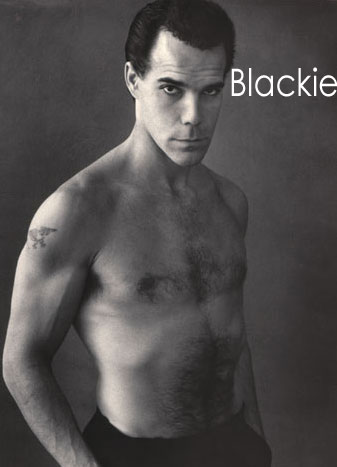
Interview with Blackie Dammett from 9 Deaths of the Ninja!


(another interview I did many years ago, this time with actor Blackie Dammett, who also is the father of Red Hot Chili Pepper's lead singer Anthony Kiedis)

Fred Anderson: How did you first became interested in acting?

Blackie Dammett: As a kid in Grand Rapids Michigan (like almost everybody else everywhere) I dreamed of Hollywood and the movies. I watched them in darkened theaters and read about them in magazines. Our family often took vacations to California and Los Angeles in particular. As a teenager I ran away from home several times--hitchhiking and even hopping freight trains to LA?2500 miles from my home.

As a young man in college my good grades earned me a scholarship to UCLA (university of Californian in Los Angeles) where they have a motion picture curriculum. I earned my degree in theatre arts specializing in motion pictures. during college (where I took obligatory acting classes) I met among others Richard Dreyfuss, Joey Bishop's son Larry, the doors Jim Morrison and Greg Friedkin, son of David Friedkin who produced "I Spy" - the TV show with Bill Cosby and Robert Culp and who wrote "The Pawnbroker" with Rod Steiger. My intention was writing and directing, and after UCLA I went to work at MGM as a writer, getting job through David Friedkin. He introduced me to James Komack who produced "Welcome back Cotter" with a young John Rravolta and "Chico and the man" with Freddie Prinze and "The courtship of Eddie's father" with Bill Bixby.

Komack hired Greg Griedkin and myself to work on the Bixby show as apprentices. Eventually MGM hired us as writers and we worked on a few scripts until the studio changed hands and we were not renewed by the new administration.

I drifted into public relations and ended up working for Alice Cooper's company The Image Group, which had clients like John Lennon, Three Dog Night, NY Dolls, Sha-na-na, Peter Yarrow, Paul Butterfield and others.

One day I was walking down Hollywood blvd and ran into my friend Karen Lamm, who was then married to Robert Lamm from the group Chicago (she would later marry beach boy Dennis Wilson, the one who drowned). She was coming out of acting classes at the Lee Strasberg institute and casually mentioned she thought I ought to try it. I did. Eventually I studied with the master Lee Strasberg himself (Marlon Brando, James Dean, Marilyn Monroe, Montgomery Clift, Shelley Winters, etc.).

Within a year I was working. "Walking Tall - the final chapter" was my first film. a week after we returned from Tennessee I did Starsky and hutch and then went right into Charlie's angel's. The rest, as they say, is history.

FA: I agree! Tell me about Class reunion. You?re character there was very weird.

BD: Probably my second most bizarre character. Class Reunion was the follow up to National Lampoon's animal house with John Belushi and was a (relatively) big budget highly anticipated film (by far my biggest
paycheck and I worked more days (40 some) that any other actor). It was written by John Hughes (Home alone, Pretty in pink, etc) but too bad he didn't also direct.

He was a fresh faced kid out of Chicago and it was his first movie. The producers picked Michael Miller to direct, a guy with a drinking problem who had screwed up some earlier films and gave him one last chance to redeem him self. Although he started out sober I guess he slipped because the film never had a real good focus and although it opened big it never had legs at the boxoffice and most critics panned it. The LA Times gave it a good review however and said, "Dammett is perfection as the pathetic psychopath". I remember I beat out Robert Englund (Nightmare on Elm Street's Freddy Krueger) and several other good actors for the part of Walter Baylor.

In a scene where the witchcraft girl uses her special powers to throw me into a wall they had me hooked up to one of those reverse catapults they use for shotgun blasted actors. The first time it worked great, but the wall shook so they did a second take. The stupid SFX guys braced a 2X4 board perpendicular against the back of the wall and when I hit it, I separated my rib cage at the breast bone and I had to do remaining 80% of the film in considerable pain which seriously impaired my physical humor. It was the same SFX people that shortly thereafter were responsible for Vic Morrow and the 2 kids being mangled to death by the crashing helicopter blade in Jim Landis "Twilight Zone".

FA: So, the most important of all, how did you get involved in the
classic Nine Deaths Of The Ninja?


Even before I came to the audition in the Century City (section of Los Angeles) offices of the producer, I decided to make him a German terrorist raised in North Yemen and I brought the Sydney Greenstreet-esque white topical suit, the tu-tone spectator shoes, and nazi stuff myself. It was the mid-80's when LA heavy metal bands had a proclivity toward anti-social behavior like nazi symbols so they were easy to find. My entire costume in the movie was my own creation.

In the script Alby had this strange fascination with Rahji and I carried it to extremes. During the audition I made up the scene where I couldn't get my cigarette lit and had a fit and tore up the producer's coffee table overturning water glasses and throwing magazines around the office and scaring the hell out of everybody. The director loved everything I did in the audition and told me to create my own madman.

FA: Alby the cruel is a pervert, a crazy bad guy. How did you work with this fantastic character?

BD: I didn't see him as a pervert, more stressed by the situation and the environment which was easy to relate to since as a film crew we were in almost the same predicament as the fictional characters. An inhospitable
jungle, poisonous snakes and spiders, sudden monsoon rains, a guerrilla communist army lurking in the dark trying to kill us, petty fights and jealousies within the cast and crew. and like in the story occasional breaks from the horror of the war when we had our rest and recuperation in Manilla with all the sex and tropical foods and garish night life.

The crew was international: an American director, Indian producer, ex-patriots from many countries living in the Philippines at the time in production and crew. And American, Japanese, Indian and Philippino and probably a few other nationalities in the cast.

FA: Some final words to our readers?

BD: I must say, of the 20 some movies and 30 some TV shows and about 50 plays, Nine Deaths Df The Ninja was one of my favorites because I could and did get to chew up the scenery because:

a). ...the part itself was so outlandish and...
b). because we shot the movie in the Philippines during the NPA's war against president Marcos and the country was on the verge of collapse and life itself was absurd. We had a battallion of soldiers protecting us in the jungle and every store in the country had an armed guard with a machine gun.

Fred

Monday, January 3, 2011

To me Cyborgs are magic - Interview with Sam Firstenberg


This interview was first published at Cinema Nocturna. This was a couple of years ago and my English was probably even shittier then, sorry for that. So, here's the interview:

To me Cyborgs are magic. Ninjas are magic. Cannon-productions are pure magic. So the only thing to do was to talk to one of the most productive directors in Hollywood, Sam Firstenberg, the creator of such classics as Revenge of the Ninja (the best Ninja-movie ever?), Cyborg Cop 1 and 2, American Ninja, Ninja III and many more.

Sam started his movie career in 1973 when he met the legendary producer Menahem Golan. He started with serving coffée, cleaning and driving. Or just being a runner. But the magic was there. Sam was on a movie set! After many hard, but funny, years as a assistant director and also director for his own short movies he finally was offered the directors chair for Revenge of the Ninja. So let?s talk with Sam about his long career in movies, and of course we begin with Ninjas!

Fred Anderson:
In 1983 you directed in one of the biggest cultmovies ever, Revenge of the Ninja starring the notorious Sho Kosugi How did you get involved in a Ninja-movie?

Sam Firstenberg:
The company that bought my student film "One More Chance", Cannon Films, had just finished a movie called Enter the Ninja. They were looking for a director for the sequel and asked if I would be willing to take on the project, to make an action movie. The truth is that I had never before heard the word "ninja" in my life, but being young and eager I did not want to pass on such an opportunity so I faked my way in by letting them think that I knew what it was all about. After watching the original movie, and two books later, I was knowledgeable enough to get started, and then I was introduced to Sho Kosugi, the star of the movie, and he took me under his wing, so to speak, and gave me an in-depth introduction into the subject. I then realized that all we had to do was make a good action movie with a ninja twist.

FA: Im not sure, but Revenge of the Ninja should be the first of your works for Menahem Golan and Yoram Globus. Tell us about these legendary producers. Where they easy to work with?

SF: I have known Menahem and Yoram for many years, in fact many years before I directed Revenge of the Ninja - I worked as an assistant director on many of their films, even one that Menahem Golan directed (Diamonds with Robert Shaw). The way they worked was that Yoram Globus was in charge of finances, and had little input on the creative side; Menahem Golan was the creative producer, involved in all the stages of making the movies. His main interest was in the script and in the editing. During the shooting I was basically left alone. I would say that in this sense, it was very easy to work with them, as long as we did not go over budget or exceed the schedule - which I never did. They trusted me and we had a very good relationship.

FA: I?m not familiar with Breakin? 2, but was it a success? Wasn?t this at the end of the breakdancing-era?

SF: First, I think the movie was at the height of the breakdance era. The first movie to come out was Breakin' and then a movie called Beat Street, but "Breakin'2-Electric Boogaloo" topped them all and became a national and world-wide immediate hit with the young audience. It was 1985 and even today, I still get fan mail from people who say that this movie influenced them as teenagers. Incidentally, two weeks ago it came out on DVD.

I have been told that on e-bay original posters and laser discs go for about $200- $300 apiece! It became an icon of the 1980's.

FA: In Ninja 3 you worked for the second time with actress Lucinda Dickey. How was it working with her?

SF: Coming from a dance background, she easily adapted to the ninja moves. Lucinda was not a martial artist, but she quickly caught on. Ninja 3 was the first time I worked with her; Breakin2 was the second movie.

FA: Talking about Ninja 3, is this the weirdest ninja-movie ever made?

SF: Yes! And the only one with a ninja hero that is a woman.

FA: I canät say Michael Dudikoff is one of my favorite actors but I always enjoys American Ninja 1 and 2. How was it working with mr Dudikoff and what's your personal opinons on these movies?

SF: Michael was the perfect American Ninja teenage idol type, with his James Dean demeanor. The first American Ninja is definitely one of my favorites with a wholesome and reluctant hero and with an innocent love story. It has very juicy villains. The second American Ninja does not have as good a story as the first movie. It would have been better if it had continued the themes of the first movie, but unfortunately it did not.

FA: Haven?t seen Avenging force, but friends tell me that it?s one of the most solid movies in Dudikoffs career. Can you tell me more about making this movie and working with Dudikoff?

SF: Not only is it a solid movie for Dudikoff, but it is a solid action movie period. Michael is great, the action is magnificent, the visuals are terrific. The story takes place in New Orleans so the atmosphere is charged with mystery and the lead villain, John P. Ryan, is the best villain ever! When it came out the movie got some great reviews - too bad it is not as famous as American Ninja.

FA: I always love productions from Nu Image and also, of course, the Cyborg Cop-series. In the first one John Rhys-Davies played the bad guy. He's a solid actor and is now more famous than ever after appearing in the Lord of the rings-trilogy. How was it working with him and David Bradley in Cyborg Cop. Was it and it?s sequel big hits?

SF: John Ryhs-Davies is the greatest! Such a nice person to work with and extremely talented, full of creative ideas, and very accommodating to the director. He is a classically trained British actor. David Bradley is less of an actor but more of a martial artist so he brought this talent to the movie. The Cyborg movies did not reach the success of the American Ninja series in popularity.

FA: Most of your movies, at least the Ninja- and cyborg-movies have been very violent and sometimes genreated moral panic in countries with harder censorship rules. What do you think about the graphic violence in your movies and the censorship?

SF: I would like to know in which countries the movies created a moral panic. but on a more serious note, there is an audience for all types of entertainment. I always try to keep the violent action in a cartoon-like atmosphere so that we don't confuse what we see on the screen with reality. I stay away from sadistic themes, and never have violence against women or children, and always stay in the realm of "movie-land." In principle I am against censorship and the rating system should provide viewers with guidelines to the content of the movie so that the viewers can make the choice whether to see the movie.

FA: You worked as a second-unit director on Crocodile, once again for Nu Image. Was it easy to work with Tobe Hooper and what do you think of the movie?

SF: Tobe and I are good friends; I know him for many years, since we both worked at Cannon Films where he directed the movie Life Force. Tobe entrusted me with all the action-y sequences of the Crocodile movie and basically I did my best to accommodate his movie.

FA: I actually hold a dvd of Spiders 2 in my hand this weekend, but I was broke right then and couldn't afford buying it, so I haven't had the pleasure of seeing it yet. Are you happy with the final result?

SF: Spiders is a complex movie from an optical effects standpoint. It has 160 optical effects. One thing I learned is that when you work with a low budget you don't get the same quality of results that the big budget movies get. But yet, it is a considerably scary and tense horror picture.

FA: To be honest, I first thought it was something for April Fools Day, but you are nowdays co-director with Ed Wood? Appearently, after reading at your official site, the raw material for an unknown Ed Wood-movie has been found and you have directed an additional 30 minutes of scenes and now completed this movie. When can we see this movie? Will hope for a nice dvd-release with lot's of extras :) I?ve only seen pictures from the new scenes, is there any pictures from the old material and have you been able to identify the orignal actors and actresses?

SF: A lot of information concerning your question is coming soon on our website surplusmale.com. I believe you will find all the information as the updates and pictures are posted and the site develops. This is an extremely exciting project but we do not yet have a release date. It might go to sci-fi festivals first, so stay tuned.

www.surplusmale.com

FA: A final word to our readers?

SF: The greatest satisfaction of my work is to know that there are people all over the world who enjoy the movies that I have directed. This is the reason I make movies - to entertain audiences, and take them into a 90 minute journey of fantasy, thrill, and excitement. If all of this works, then I am grateful.

Please visit Sam Firstenbergs official site.

Wednesday, December 2, 2009

Plaguers is here! An interview with director Brad Sykes (part two)


And here we have part 2 of the Brad Sykes-interview, the director of Plaguers! You can read part 1 here.

The computer-screen graphics was also very, very retro. Loved that. How did you work with the design of the movie, and did you and your team do a lot of research, watching old movies and so on?

I’m glad you appreciated that. The design of the entire movie, on some level, grew out of the sets that we ended up shooting on.

Years after writing the script, I found some old spaceship sets lying around that were built in the early nineties, but looked more like they were left over from a seventies or eighties sci-fi movie…I felt like I had literally walked into one of those films. At that point, the sets themselves became an inspiration, pushing the movie more and more in a retro direction. Everything followed suit: the prosthetic FX (which I love anyway), miniature ships, costumes, the computer displays, etc.

Some of the team – like myself and the FX guys, for example – didn't need to do any research. This stuff is in our blood. Vicky Avery, our costume designer, also has a encyclopedic knowledge of genre films past and present, and we intentionally wanted the pirate girl's costumes to have an iconic 60’s look, like something from Planet of the Vampires or Barbarella.

Our production designer, Scott Enge, hadn’t seen all the reference points, but he really wanted to capture the look I was after and would ask me for movie recommendations, and he would watch one after another…Battle Beyond the Stars, Android, Lifeforce, etc. He had to build quite a few new sets for the film, and really did a wonderful job matching the stuff he built with the old ones that were standing. My discussions with our DP, Scott Spears, when talking about lighting and framing, were all about maintaining a certain naturalistic, carefully composed quality that I associate with older movies like Aliens or a lot of Carpenter’s stuff, as opposed to the quick-edit, jittery, saturated look a lot of horror films have today. It was really important that everyone be on the same page so we could get the look and feel I wanted.

How did you get Steve Railsback involved? One of my all time favourites is Lifeforce, and it was great fun to see him back in a sci-fi movie like this.

I was a fan of Steve’s work growing up, especially Lifeforce and The Stunt Man. When I was writing the part of Tarver, I thought “wouldn’t it be cool if we could get Steve Railsback to play this part?” Every writer has thoughts like this, but how often do they come true? When we started casting, my wife and producer Josephina got hold of Steve’s former agent, who then contacted him, and then Steve called us! We sent him the script, he liked it, and then we met up and talked more about the character and the movie. He signed on soon afterward. In fact, he was the first actor on board. Later on, I admitted to him that I wrote the role with him in mind, and he told me that the only one other writer who ever did that was X-Files creator Chris Carter, who wrote the memorable “Duane Barry” character for Steve.

Having Steve in the movie was a real thrill and I can tell you, no other actor gets as involved as Steve does during prep and during shooting. He loves the crew and is very generous with the other actors. He even brought a friend of his in to coordinate some of the fight sequences. One of the things I really liked about Tarver – and I think this was one of the reasons Steve wanted to play him – is that his character is an essential part of Plaguers from the beginning till the end. The intensity and dedication Steve brought to the part was rewarded in 2008 when he won “Best Actor in a Science Fiction Film” award at ShockerFest International Film Festival.

My friend Jocke (also a fellow horror-blogger) is obsessed by the poster-art for Plaguers. Did you have the idea yourself and let someone else do the design of the poster, or have you done it yourself?

The poster was created by our foreign sales company. I’d like to take some credit for it, as it captures the movie perfectly, but I really had no involvement with it…although back when I was writing Plaguers, I drew up a “fake poster” for fun (I often do this to motivate myself to finish the script), and my own crude sketch (which I never showed to anybody) was really close to what they ended up doing! Back then, I was thinking about the poster for Nightflyers, which was basically a ghostly face formed over a starfield, with a small ship in the corner. If you look at the art for Nightflyers and Plaguers, made about 20 years apart, you’ll see how similar they are.

Explain a little bit about the casting process, how do you choose actors? Is there any special actors you want to work with?

Casting on Plaguers was pretty much the same as any of my other films, only we had more time and money and were able to see more actors. When holding auditions, I always look for the same things: acting ability obviously, a certain look, enthusiasm, and a good attitude. On Plaguers we were asking a lot from people, as the girls especially had to be attractive, talented, good at physical action, and comfortable wearing a lot of makeup for day after day! A pretty tall order for any film, especially one as low budget as ours. I explained to them in detail that they would be spending long hours in the makeup chair and even more hours on set wearing contacts, fangs, and other prosthetics, and they all seemed fine with it. In truth, once we got on set, some of the cast had difficulty with the makeup while others had no problem with it and really got into their “plaguer” side. I’m used to these types of situations after doing so many effects-oriented movies and was able to get what I needed in the end.

As for actors and actresses I’d like to work with, well, there are too many to list. I like actors who take risks and make creative, rather than commercial, choices. Here’s a partial list: Willem Dafoe, Colin Farrell, Viggo Mortensen, Lance Henriksen, Evan Rachel Wood, Asia Argento, Jennifer Jason Leigh, Kim Dickens, Juliette Lewis…


I'm 32 years old and still love’s some good gore, and in Plaguers we get some nice nasty surprises. John Carpenter once said that he enjoys making genre-movies because it's always something fun to film, and I guess the shooting of a gore-sequence both can be fun and stress. Or both at the same time. Let us know some more about shooting gore, action and effects and what you feel about it.

I agree with Carpenter about that…with a genre movie there’s never a dull moment, and not just because of the effects, sometimes it can be a certain lighting trick or camera movement, or the intensity of the performances. Special effects can be time-consuming to set up, and the stress comes from not having enough time or money to do a few more takes or really get it right. But when a gag works, it’s a great feeling and for me, a real rush…

For example, the scene in Plaguers where the creatures rip Steve Railsback’s arm off and drag him down. It took a long time to set up the arm gag and the blood tubing, and it was a “one shot deal”, we had no time to set it up and do take 2. So there’s Steve, with a fake arm attached to his torso, and two FX artists below him with blood tubing rigged just out of camera view. And three more actors made up as plaguers attacking him and ripping the arm off. Everything had to work – performances from all four actors had to be good, the arm had to come off and blood had to spray out at the right angle, tubes had to remain hidden, camera had to be set at the right angle, etc. So needless to say it was pretty stressful, but we double-checked everything and when we shot it, the gag worked perfectly, everyone performed well and we were all happy with it.

We had other shots that were harder to capture, like another one I remember in the “medbay massacre” as we call it, where Kyra (Noelle Perrs) stabs a female plaguer (Stephanie Skewes) in the neck with a cleaver. Tubing was running up under Stephanie’s dress to her neck, where the cleaver would strike. Goo was to spew out through the tube on cue, with cleaver basically concealing the end of the tube. Complicating matters, poor Steph was literally blinded by the contacts she was wearing, which had made her eyes redden and swollen (we later found she was allergic to them). It was in theory a simpler setup than the arm-rip gag but took three takes to get something usable. The first two takes, Noelle held the cleaver too close against the tube, pressing it against Steph’s costume and blocking the flow. So both times, all the goo just bubbled up at the top and leaked downward, soaking the inside of Steph’s costume! I have to say, Stephanie was really great about the whole thing, especially considering her total blindness at the time! Just moving the cleaver a hair to the right, a few inches away from the tube, did the trick and the gag worked. It’s funny to recall it all the details now, but at the time it was agonizing.

We shot Plaguers in fourteen days, and every day on the shoot was like this. We had actors in makeup (which in many cases went through several “stages” from basic contacts and fangs to advanced prosthetics) splattery gore effects, actors in full creature suits, fight choreography, stunts without stuntmen or doubles. I took on a lot of action and FX in Plaguers, definitely too much at times for our budget, but I was so tired of seeing films that didn’t deliver the goods. I really wanted to go for broke and put in all the cool stuff that I’d been missing lately.


Talking about gore an violence, did you have any problems with censorship in your career?

As most of my films are released unrated, I have not run into too many problems with censorship. I have had a few movies, like Plaguers, released in the US with an R rating. On that one, we didn’t have to cut anything to get the R. I also know that my movies Goth and Death Factory were released on DVD in Germany in two versions, a cut one for the rental market and an uncut version for sell-through. The two versions are radically different. I think censorship in general, at least towards violence, has relaxed recently in the US. It’s usually sex that censors have a problem with here.

Do you handle the distribution yourself? A lot of these low budget movies seem to be released in Hong Kong and Thailand first, is that an easy market to sell your productions to or are they just faster then the rest of the world? We're of course talking legal versions.

I’ve never been involved in the distribution business, though I have made a few movies directly for distributors. Every film seems to have a different trajectory once it starts being sold for foreign and domestic. It depends on a whole host of factors, many of which have nothing to do with the actual movie that’s being sold! A lot of my earlier films came out in the US first, then showed up overseas later on DVD and cable. In Plaguers’ case, it’s been kind of the opposite. Our foreign sales began last November (almost a year ago to the day I’m writing this) and the movie had its first release in March 2009, on a Hong Kong region-free DVD, before our domestic sales agent had locked a US distributor. Plaguers comes out here in the US on Dec. 8 and by then, it will have been released either on cable, on DVD or both in Thailand, Japan, Russia, all of Eastern Europe, the UK, Germany, the Middle East, and a few others – in fact I was recently told it sold to Sweden, so keep your eyes peeled.

And since you mentioned legal versions, I will mention here that after Plaguers was released in Russia, it was immediately pirated and showed up on a gazillion illegal download sites. It can happen to indies just like it happens to the studios. The only difference is we indies don’t have the studios’ deep pockets and really depend on making our money back, or if we’re lucky going into profit, from legal releases. So if you like indie films, rent them or buy them, don’t download them, please. Not only does this hurt the filmmakers’ livelihood and keep them from making more movies, you're not viewing the film the way the filmmakers wanted you to hear or see it.

I bought the Hong Kong-release, which is excellent when it comes to picture quality. But now there's an upcoming US release and I guess I have to get that one to :) It will be a lot of extras on it, so can you tell us more about to expect from this new release?

I’m glad you picked up the Hong Kong version. I have one here, as well. The packaging is great but believe it or not, that DVD was made off a DVD copy! It came out in Hong Kong before we had delivered the foreign deliverables (HD master tapes) that other territories have used to create their DVD releases. I guess it’s a testament to the quality of the photography that the HK release looks as good as it does. That release is also, for some reason, missing the first few seconds of the movie, which consists mainly of three title cards. Otherwise it’s intact.

The US DVD release, coming out from Image Entertainment on Dec. 8, is the definitive version of Plaguers. It will present the movie at 1.78:1, in a 5.1 Dolby stereo mix. Extras will include the official making-of, “Scares In Space”, a 35-minute making-of featurette that Josephina and I produced containing tons of cast and crew interviews, FX tests, behind the scenes footage and more. And it will have an audio commentary by myself, Josephina, and Steve Railsback that we recorded at Image.

You directed 19 movies since 1999, Camp Blood being the first and Plaguers the latest. It's amazing, and as a former producer I know the hard work behind every movie. I made 3-4 movies and then I gave up, just doing stuff in front of the camera now and writing scripts. It just takes so much energy to produce. So I'm impressed and wonder how you can manage to do so much?

I’m very fortunate to have had so many opportunities to write and direct over the last ten years. I got to direct my first feature about half a year after moving to L.A. I wasn’t expecting that at all and it was an opportunity which literally came out of nowhere. But at the same time, I was ready for it when it came. The finished movie didn’t really go anywhere but it did get my career started. Ever since then, I’ve just kept working hard, dealing with all kinds of situations, from compromised shoots to botched releases to “friends” that can’t wait to try and screw you over and take over your film. But no matter what, I’ve never given up and always keep a lot of balls in the air at once. Like you said, it’s hard work, not just the filmmaking but the pitching, looking for financing, etc. Once we started preproduction on Plaguers, I decided that for once, I was going to devote all my time to that one project and not take on too many other gigs it I could help it. I stayed 100 percent involved through the final delivery to the distributor. This process went on for a few years but I am more satisfied with the end result. In the future, I would like to make more films this way.

I'm sure this movie will be great success, so I really hope you will make a sequel :) Any plans for the future?

Thanks! Plaguers certainly has done pretty well over the last year. We’re really happy to see all the different overseas releases it’s had and of course we’re very excited about the upcoming US release. I had ideas for two sequels even while we were editing. Here’s the basic idea for the first one…it would open with the “space coffin” crashing on Earth, in a desert wasteland and bursting open, releasing Thanatos – and Holloway, who is now a plaguer! I’d love to do something more like Mad Max or After the Fall of New York, with lots of souped-up vehicles and car chases along with the usual gooey plaguer mayhem.

And yes, this alien energy-ball… what was that? That's one reason why you need to make a sequel! :)

The energy ball is called “Thanatos” (it’s not just a made up word - look it up). It’s sort of an embodiment of evil that sort of moves from place to place, spreading death and devastation in its wake. It’s been around forever and our characters are just unlucky enough to bring it on board their ship. The only thing we’re not sure about if it’s a “he” or a “she”, but no matter what, it would have to play a big part in the next one…after all, you can’t have Plaguers without Thanatos! 

I would like to thank Brad for doing this interview with Ninja Dixon, and I hope you all go and buy this movie now! It's worth every penny!

Thanks!

Fred